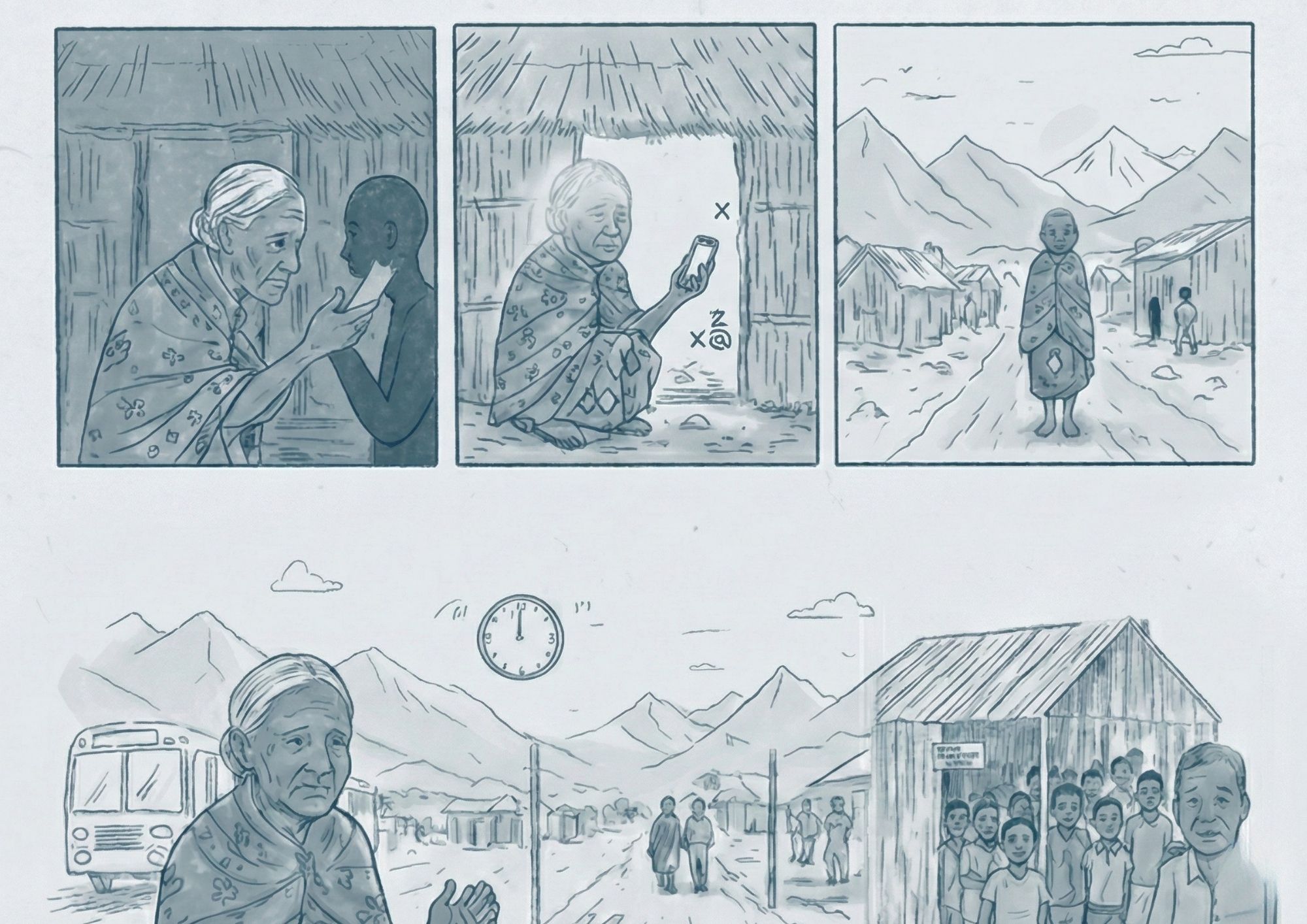
Bureaunia Chronicles: Episode 5
What to How …
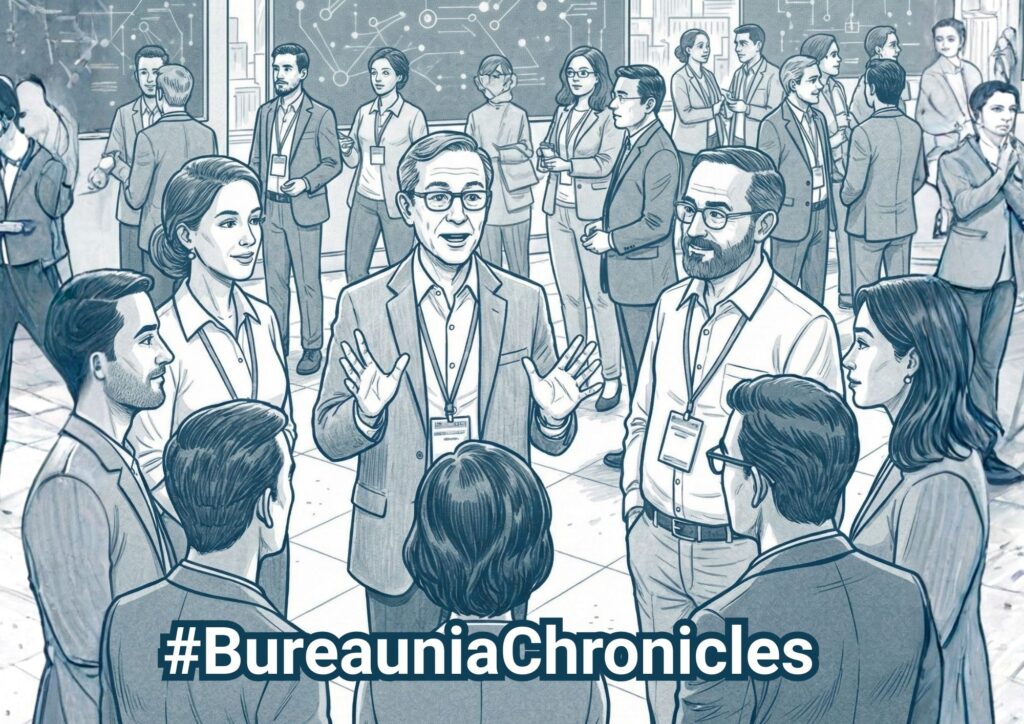
The remarkable difference I saw between Cairo and Cape Town was the shift of discussion from “What is DPI?” to “How do I implement DPI?” Quite amazing if you consider how unprepared many of these conference participants felt when they attended the DPI Summit 2024 in Cairo compared with how confident they now feel attending this year’s summit in Cape Town.
The number of participants almost doubled to over 1000 this year. Confusion about DPI was replaced with conviction that DPI is the most effective way towards digital inclusion.
As the Digital Minister of Bureauia, I found this mental transformation heartening. At the same time, I was looking for more than plumbing. The DPI trifecta – ID, payments, and data exchange – still sounded like plumbing to me, and I was eager to find a strong linkage to service delivery in health, education, agriculture, and financial transactions that matter to both the people and providers.
The reflections of my Finance Minister colleague, Auditax from the UNGA in September in NYC rang even more true: “What if simplification came first?” My mind turned to Mariamix, a 72-year old widow in Villix, who has to prove every month that she is alive.
When staying alive becomes a monthly test
Mariamix wakes before dawn. Like every month, if she can’t prove she is alive, her old allowance stops.
My ministry, with the help of the global ID experts, has launched a killer app BureID which she uses to prove her “aliveness” through a smartphone face scan. The problem is she doesn’t own a smartphone. Even if she did, she wouldn’t know the first thing beyond numerical buttons. So, she depends on the smartphone of the neighbor’s son. But the app fails in low light, then again in harsh sun. When the neighbour’s son leaves with the phone, her access goes with him.
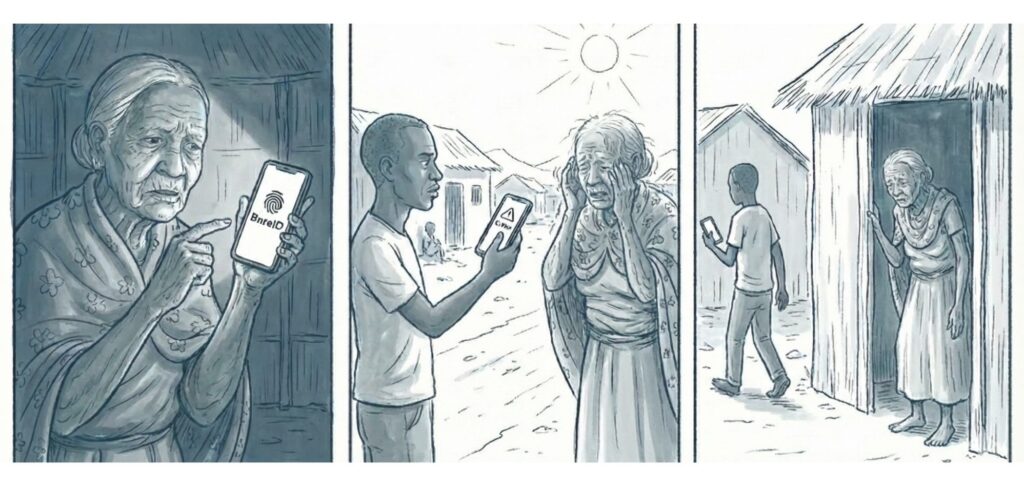
So she walks an hour to the bazaar. The agent shrugs: “Biometrics device is down! Loadshedding.” She pays for a ride to the service centre; the scanner can’t read her fingerprints, worn smooth by years of hard work in the field. Not only has not been able to get her old allowance today, she overspent in order to “access” it, still unsuccessfully.
On paper, she is “included”; in practice, the system recognises her feature phone number and ignores her body, time and dignity.
Just a few months ago, my Prime Minister launched, with a lot of fanfare, BureID as the ultimate simple ID system for the poor. Now, I couldn’t help but feel that we “simplified” ID in our reality of the airconditioned workshop room, not Mariamix’s reality of device-poor-electricity-poor-skills-poor rural setting.
On listening to presentations and talking to fellow participants at the DPI Summit, I was woken up to myriad alternative possibilities for Mariamix to prove she is alive.
When global lessons reach Villix
In Kenya’s Inua Jamii, a small transaction or balance check at an agent every six months counts as proof-of-life; long inactivity triggers review instead of monthly punishment.
A Digital Life Certificate in India (Jeevan Pramaan) is usually given once a year at banks, common service centres, or even at home via India Post Payments Bank staff using handheld biometric devices, so many pensioners no longer need to visit a government office just to prove they’re alive.
The old allowance authority of South Africa focuses life certification on marginalized beneficiaries by death records from the Department of Home Affairs, instead of demanding constant in-person proof.
Why didn’t our international DPI gurus suggest such frugal innovations steeped into the local context of Mariamix? Did we not develop a deep customer journey before the technical design? Or, did we just do that on paper and not translate that into the technology choices?
What can my design team take from Kenya, India and South Africa? It dawned on me that none of these were technology choices, but adventures in institutional silo busting, public-private partnerships, and establishing technical interoperability across multiple ID systems. All geared towards genuinely serving Mariamix, not Technonix, me, the Digital Minister of Bureaunia. My colleagues were shooting for my excitement with the app, and forgot about Mariamix.
I kept thinking about one conversation at the DPI Summit: the use of voice to identify a person. Can that revolutionize proof-of-life for Mariamix and have her access the old allowance on the same day? Now, wouldn’t that be dignified for a human in the age of AI!
Simplification as the Lens for Inclusion
My key takeaway from Cape Town is twofold: reinforcement of my conviction for building the appropriate digital plumbing using DPI, and the urgency to study and understand the real needs of real users at the grassroots. That understanding will lead to true simplification. And that simplification will lead to true inclusion.
Anir Chowdhury
DigitalEquity #DigitalTransformation #DigitalPublicInfrastructure #DigitalInclusion #InstitutionalInnovation #BureauniaChronicles #DXA #9iDXCanvas #ServiceSimplification #UNGA80 #Inclusion #SocialProtection
Leave a Reply