Bureaunia Chronicles: Episode 16
Aithorix begins asking uncomfortable questions about how government systems actually function
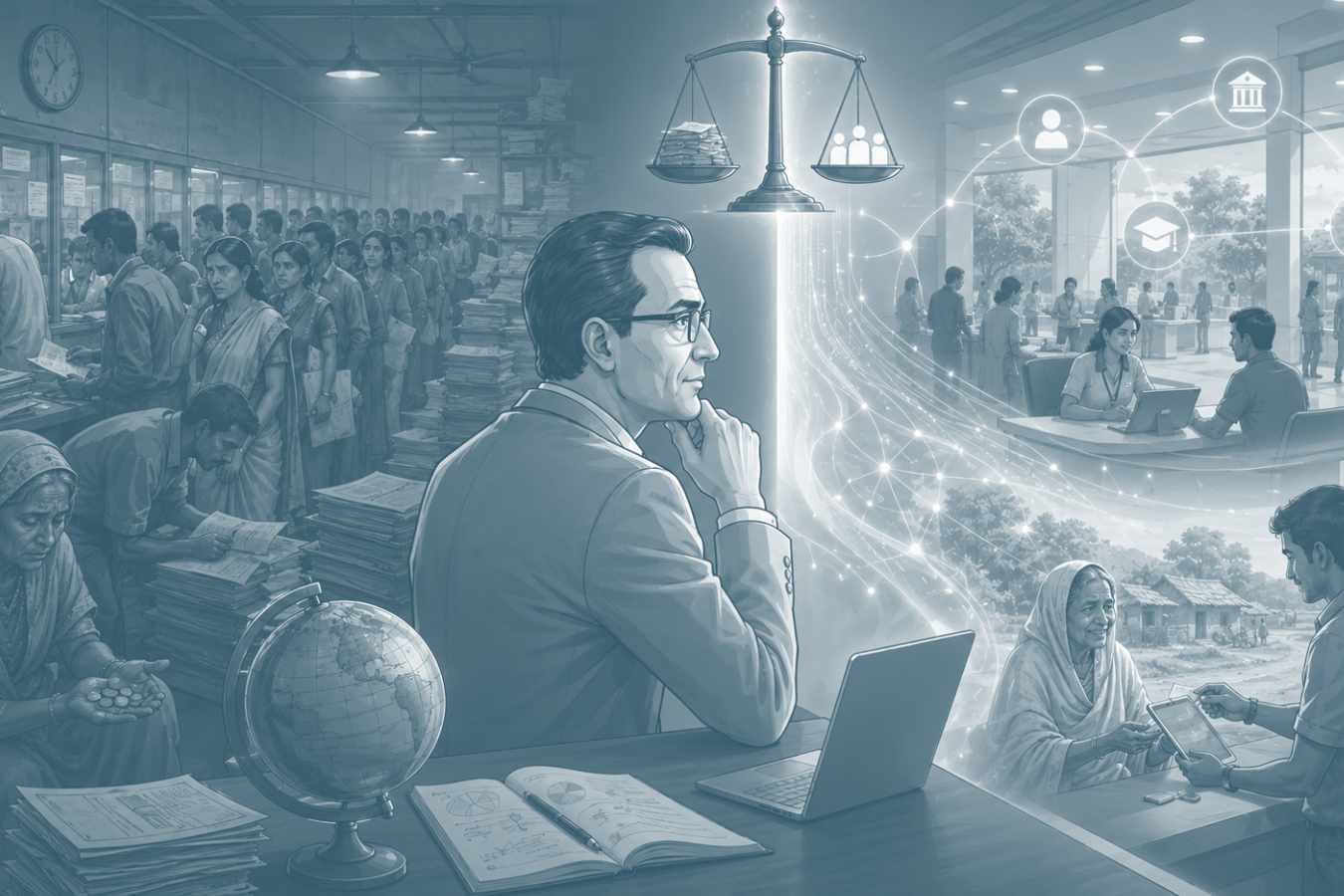
The funny thing was that all the information I provided to the passport office on my application form already existed with the Ministry of Education. All the information Stitchwel provided already existed with the Ministry of Local Government at the birth registration office. So, why couldn’t they share this information with the passport office? Was it because the passport office was under the Ministry of Home? Did that mean every ministry was a different government? Did that mean ministries were not allowed to share data with each other? My civil servant uncle told me they shared data when it suited them. Why didn’t they do it when it suited us? Wasn’t the government supposed to serve the people?
The funnier thing was that one would need to go through this entire process again when renewing the passport. “Crazy or WHAT!” as a dear friend from the university would say. Didn’t I just give all this information to this very same office five years ago? Did they burn the forms?
Without being an expert in governance or political science or whatever it was that one needed to know to understand government, I felt someone needed to reformat the public service delivery. But who?
Before I left for abroad in that August, I started digging to understand whether public service delivery was atrocious only for passports. Perhaps the process was deliberately made incomprehensibly complex to weed out applicants trying to travel illegally. I found out that it wasn’t the case. We didn’t discriminate. We made all public services equally inaccessible and unfriendly. The poorer you were, the more inaccessible and unfriendly the services to you.
I found out that the 80-year-old widowed mother of our house help who received a widow allowance from the government spent an average of 120 taka in transportation costs and bribes to collect her monthly 500 taka allowance. Essentially, she was spending 24% of her allowance even before she received it. How was she affording this? How come the government didn’t know about it, or if it did, couldn’t figure out a way to get the allowance money to a location near her?
I found out that my house help, who was poor, always got pushed to the end of the queues when she went to government hospitals. The relatively wealthier muscled their way to the front and she couldn’t say anything. The queueing theory was not dissimilar from the passport office: the patient stood in multiple queues throughout the day to get a prescription: first queue to get a paper ticket with a serial number; the second queue to see a very junior doctor who would prescribe some tests; the third queue for blood tests; the fourth queue for a urine test; the fifth queue for an x-ray, and so on for other tests; and then the final queue to see a specialist if the patient was lucky and energetic enough to cover all queues before the hospital closed at 2:30 p.m. How was an ill person expected to move from queue to queue all day in search of one prescription? Why was the hospital closing so early? Wasn’t the poorest person the most deserving of the free public healthcare, and if so, why was she always the last person to reach any of the ten service counters she had to touch on a single day?
After asking such silly questions and not getting any satisfactory answers and feeling utterly helpless, I put myself to sleep on my long flight out of Bureaunia. The conclusion remained firm in my mind: steer clear of Bureaunia civil service. In fact, stay away from Bureaunia altogether.
That’s what I did. While staying away from Bureaunia and its government, I reformatted hardware and software for my professors, and then reformatted organizational structures for my clients abroad.
That is, for 18 years.
Bureaunia is imaginary, but the queues are real for every developing nation. Next: Episode 17 — “In Line” to Online?
Anir Chowdhury
#BureauniaChronicles #DigitalTransformation #DigitalPublicInfrastructure #DigitalInclusion
Leave a Reply