My mother was always thinking about a future the rest of us hadn’t arrived at yet. Not only was she thinking about it, she was ever ready to craft it. After all, Tagore’s ‘jodi tor dak shune keu na ashe, tobe ekla cholo re’ (if noone answers your call, walk alone) was her favourite song.
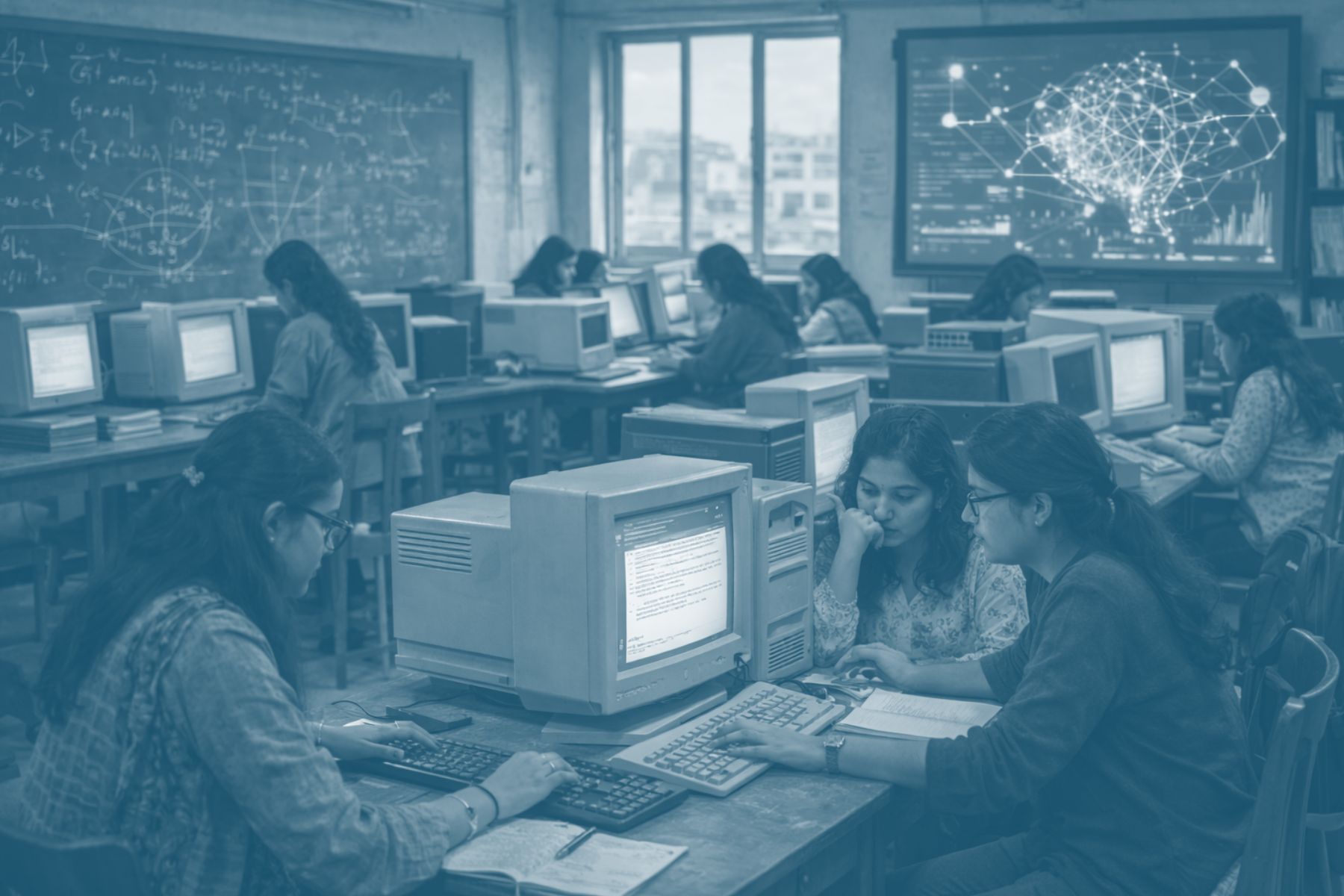
Professor Raushan Ara Rashid taught mathematics at the largest public women’s college in Bangladesh from the late 60s to the early 2000s. In the mid-1990s, she decided her students couldn’t wait for the world to get ready for them. So she lobbied the government for months to get a computer lab. When the institution ran short, she covered the costs by reaching out to friends and family and recruiting external trainers pro bono. One has to understand that it’s not customary to set up a facility in a public institution without public funds. But she made that risky call with her authority as the head of the math department. Because she felt women couldn’t afford to fall behind in technology. And because she gave herself the permission to be the agent of change.
The prevailing wisdom was loud and confident: technology was for richer countries; technology was for the powerful; technology was for men. She didn’t argue with it. She just ignored it. She made the change quietly, without seeking credit.
I didn’t fully understand what she was doing until years later when I was working on women’s financial inclusion across the Global South.
We converted social safety net payments and wages from cash to mobile money. We called it empowerment. We gave speeches about it. We put it in our donor reports. Women were the named beneficiaries. The money was going directly to them.
Except it wasn’t.
The mobile phone belonged to the husband. Or the father. Or the brother. The woman’s name was on the account. The man’s hand was on the device. We had digitized the transaction. We had not shifted the power asymmetry one inch.
We had automated the status quo and called it progress.
Now we stand at the edge of an AI divide that will make the digital divide look modest in comparison. We quite possibly are building AI on top of that same status quo. And the stakes are not a payment transfer. They are who gets a loan, who gets a job, who gets healthcare, whose voice a system is even trained to understand.
The AI divide will be faster, deeper, and far harder to see because it will be buried inside a model, justified by data, and dressed up as objectivity. If the training data doesn’t reflect women’s realities of literacy, connectivity and power asymmetry, if the use cases are built around male-default economic participation, we won’t just leave women behind. We will automate their exclusion.
‘Amma’ never used the language of inclusion. She didn’t wait for a policy framework or a donor programme. She just looked at her students and refused, flatly and immovably, to accept that their futures were negotiable.
We are long overdue for that same refusal. At scale.
Anir Chowdhury
#InternationalWomensDay #WomenInTech #AIInclusion #DigitalDivide #Bangladesh
Leave a Reply